
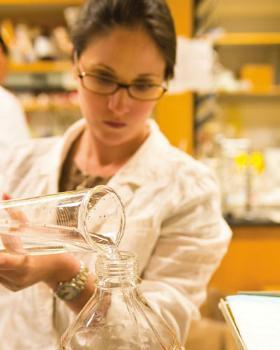
 Discovery & Innovation
Since the School of Medicine’s inception in 1807, our faculty have made numerous advances that have dramatically and measurably impacted and improved people’s lives. Every day, our researchers ask “big science” questions, leading to discoveries that pave the way for new treatments and cures. Our physician-scientists truly embody the School of Medicine’s guiding principle of discovery-based medicine. Our approach to treatment, procedures and management of patients at hospitals across the University of Maryland Medical System is based on fundamental research conducted in the laboratory.
We are also committed to nurturing and growing an expanded cadre of biomedical and clinician scientists through our Center for Advanced Research Training & Innovation (CARTI).
The School of Medicine's areas of research focus include:
Basic Science
Medical breakthroughs are built upon the foundation of basic science research. The focus is on improving our understanding of health and human diseases at their most basic levels in order to develop more tailored therapies. Our faculty scientists are focusing on fundamental discoveries in the following areas, including:
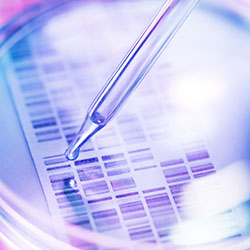
Genomics
The emergence of genomic medicine and the growth of personalized and preventive medicine will catalyze fundamental changes at many different levels in the future of health care and health systems. In short, genomics is revolutionizing medicine and healthcare, with the development of new life-saving diagnostics and medications. Our faculty members work to advance cutting-edge genomics, multiomics, and spatial molecular technologies to better understand health, discover ways to prevent disease, and to develop new treatments. In addition, they combine pioneering computational and systems biology approaches with high-throughput sequencing to empower discovery.
Vaccine Development & Global Health
Vaccinologists, virologists and other infectious disease experts at UMSOM are helping to protect people both in the U.S. and throughout the world against the world’s most pressing infectious diseases. They are developing and testing new vaccines and treatments against existing diseases and emerging pathogens to ensure a healthier future for all. Our faculty are doing their work in conjunction with the following:
Brain Health
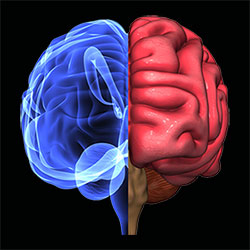
The University of Maryland – Medicine Institute for Neuroscience Discovery (UM-MIND) aims to accelerate translational research of the brain by facilitating interaction between basic and clinical scientists and enhancing collaborative research. It encourages multidisciplinary collaboration that promises to accelerate the discovery and translation of novel therapies for the most pressing problems in brain science.
Addiction
To combat the devastating impact of substance misuse, the Kahlert Institute of Addiction Medicine brings together leading addiction experts to collaborate and create the synergy necessary for systemic change. UMSOM faculty scientists who are part of Kahlert Institute include neuroscientists studying the brain mechanisms underlying addictions, physician educators, and clinicians providing a continuum of addiction care with evidence-based harm reduction measures.
Medical-Technology
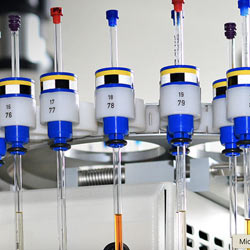
Faculty physicians are collaborating with engineers to help develop next-generation medical solutions to help solve generational health challenges. UMSOM also has a portfolio of shared research resources (Cores) to provide services, instrumentation, expertise, and supplies needed for researchers to engage with the latest technologies to perform research at the highest levels.
Big Data
The University of Maryland Institute for Health Computing (UM-IHC) merges the computational expertise, clinical expertise, biomedical innovation, health data and academic resources of the University of Maryland, College Park; the University of Maryland, Baltimore; and the University of Maryland Medical System to innovate health care delivery and support the Montgomery County life science community. The UM-IHC conducts interdisciplinary research to advance health care through advanced computing and data analysis, including in the areas of applied AI, bioinformatics, and real-world evidence/adaptive clinical trials.
Cancer
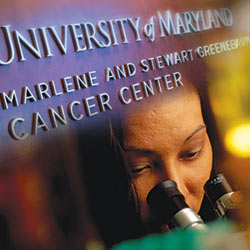
The Program in Oncology that is part of the University of Maryland Marlene and Stewart Greenebaum Comprehensive Cancer Center (UMGCCC) has established strong translational research programs. Areas include experimental therapeutics, hormone-responsive cancers, molecular biology and genetics, viral oncology, tumor immunology, and cancer prevention and control. Cancer Center members have a strong commitment to intra- and inter-institutional cooperative cancer research.